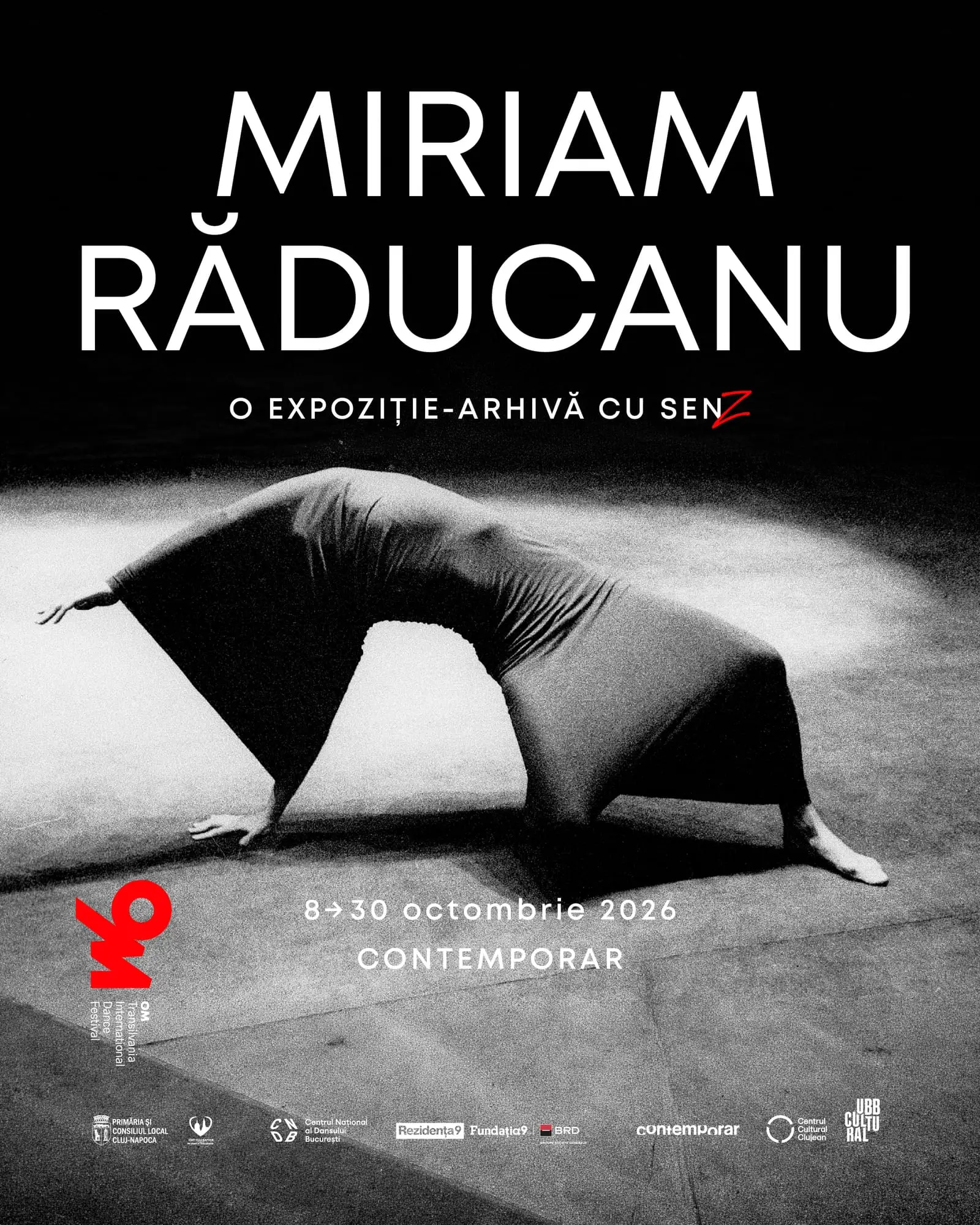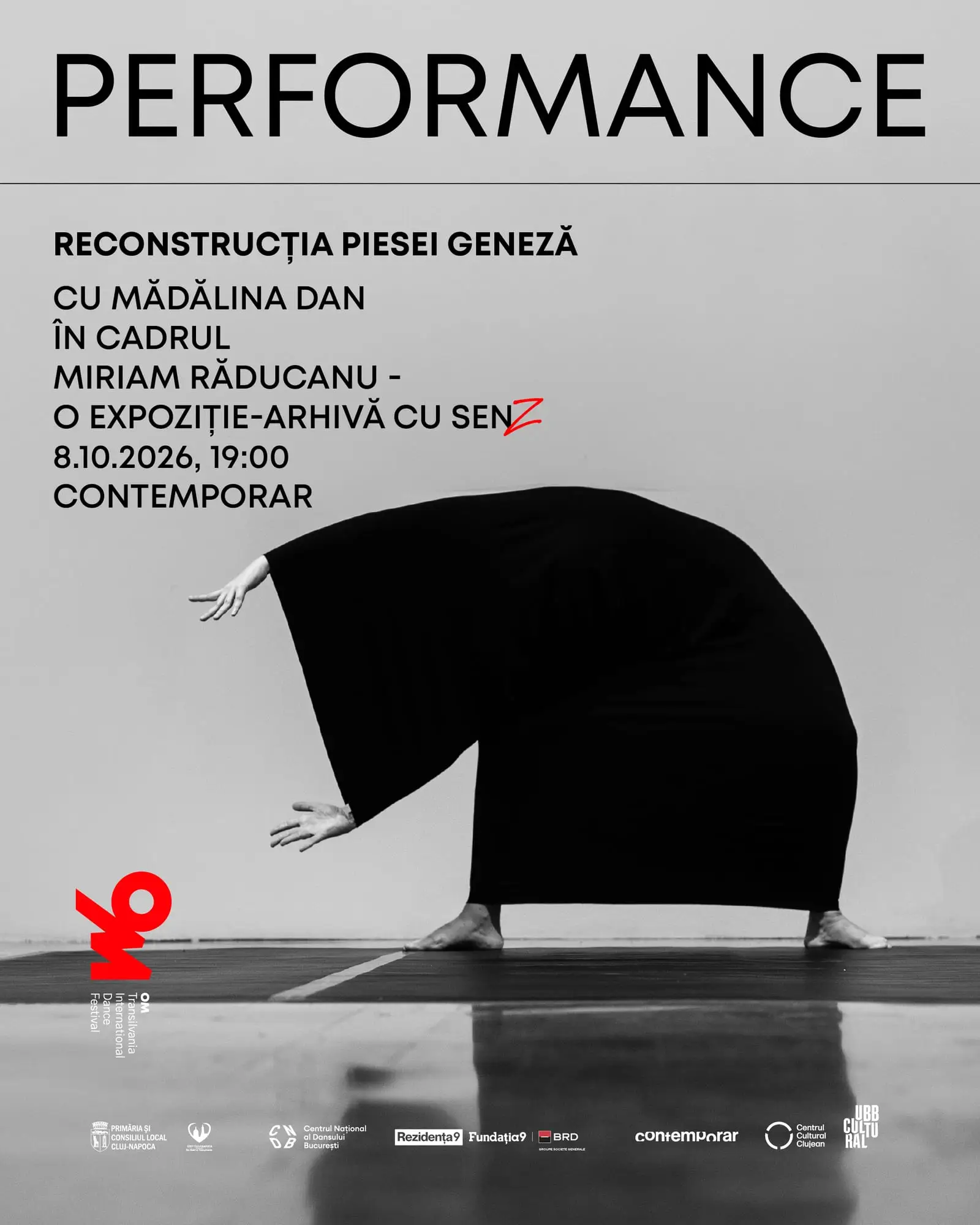
Miriam Răducanu catalog launch
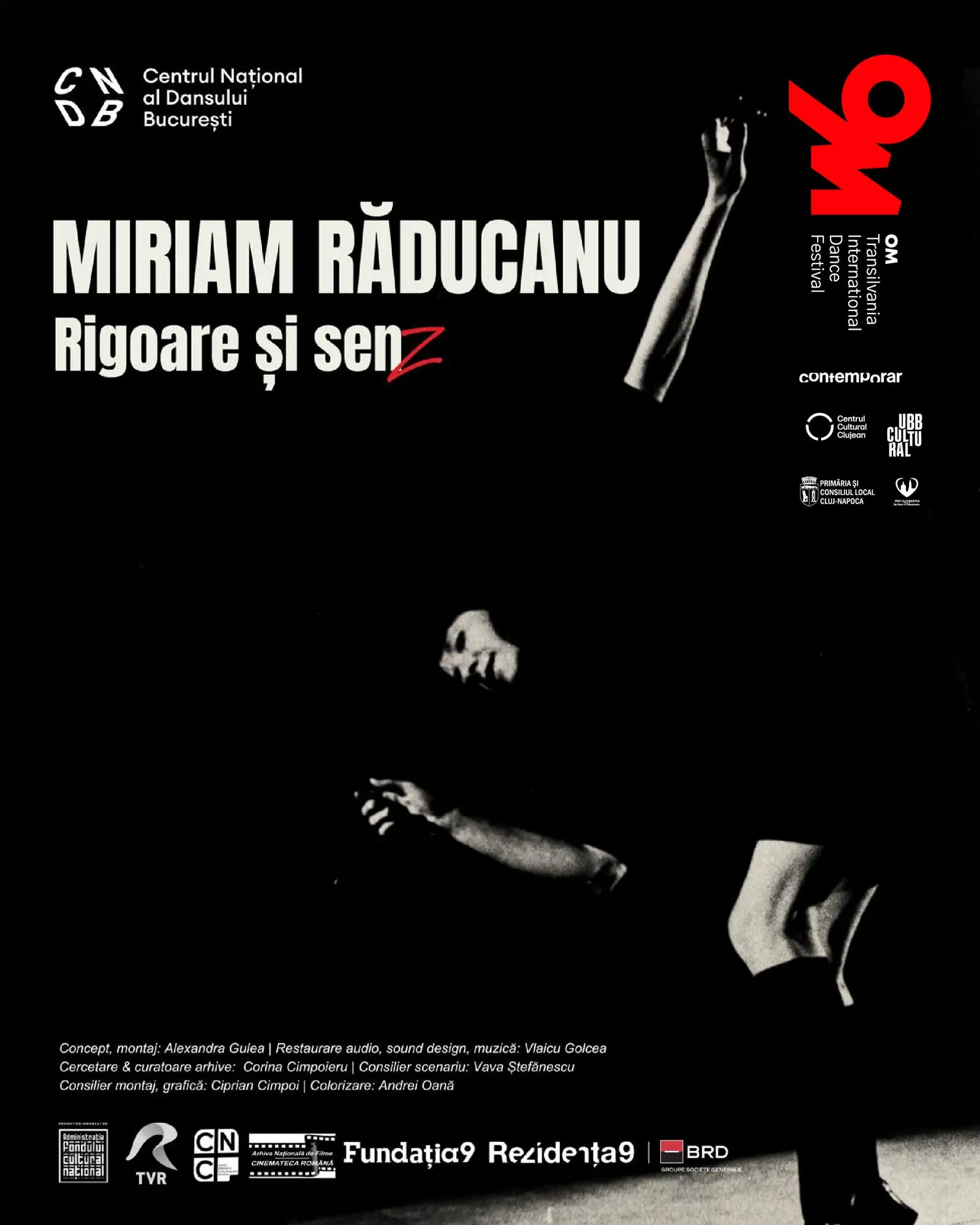
Miriam Răducanu
The exhibition → free entry
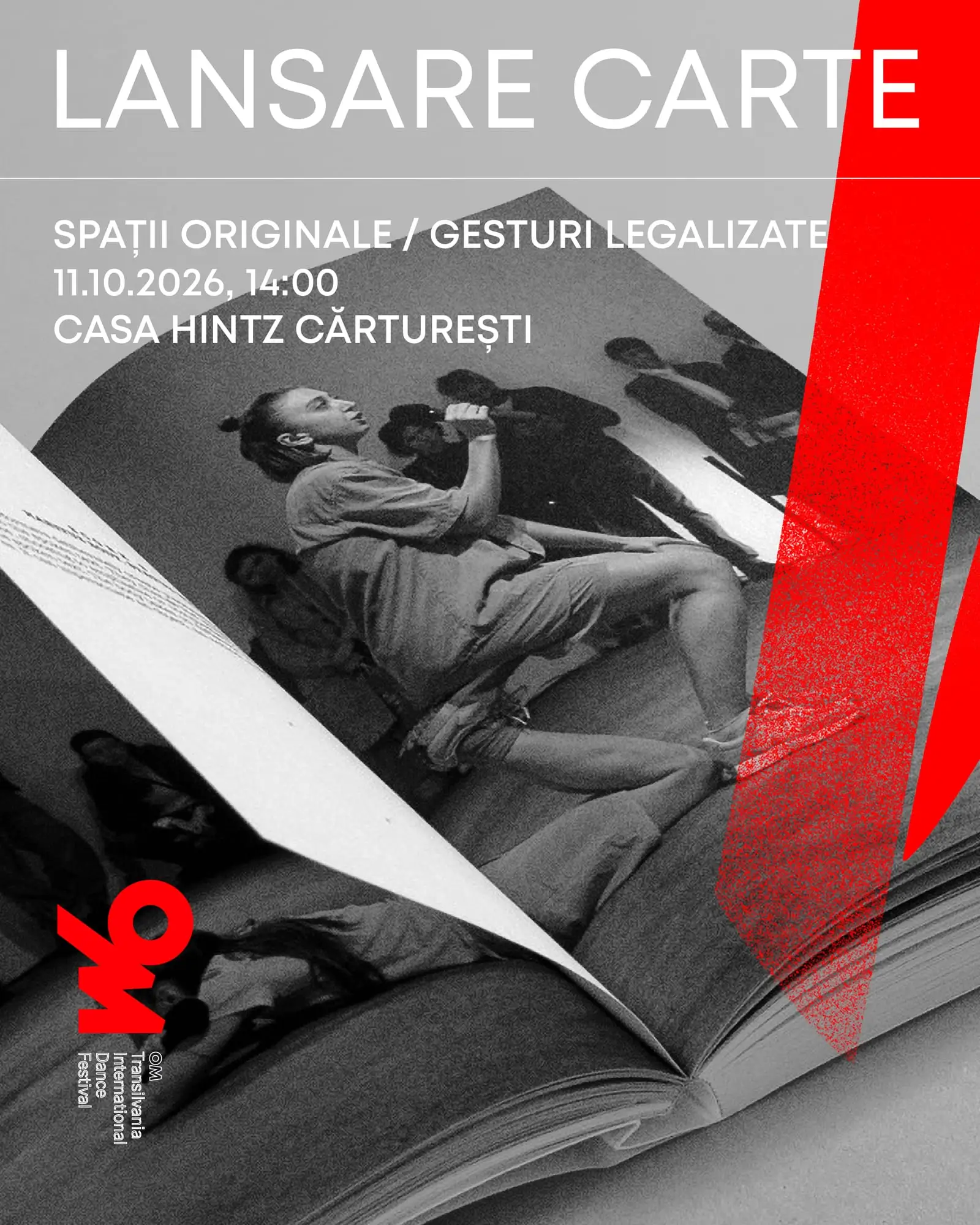
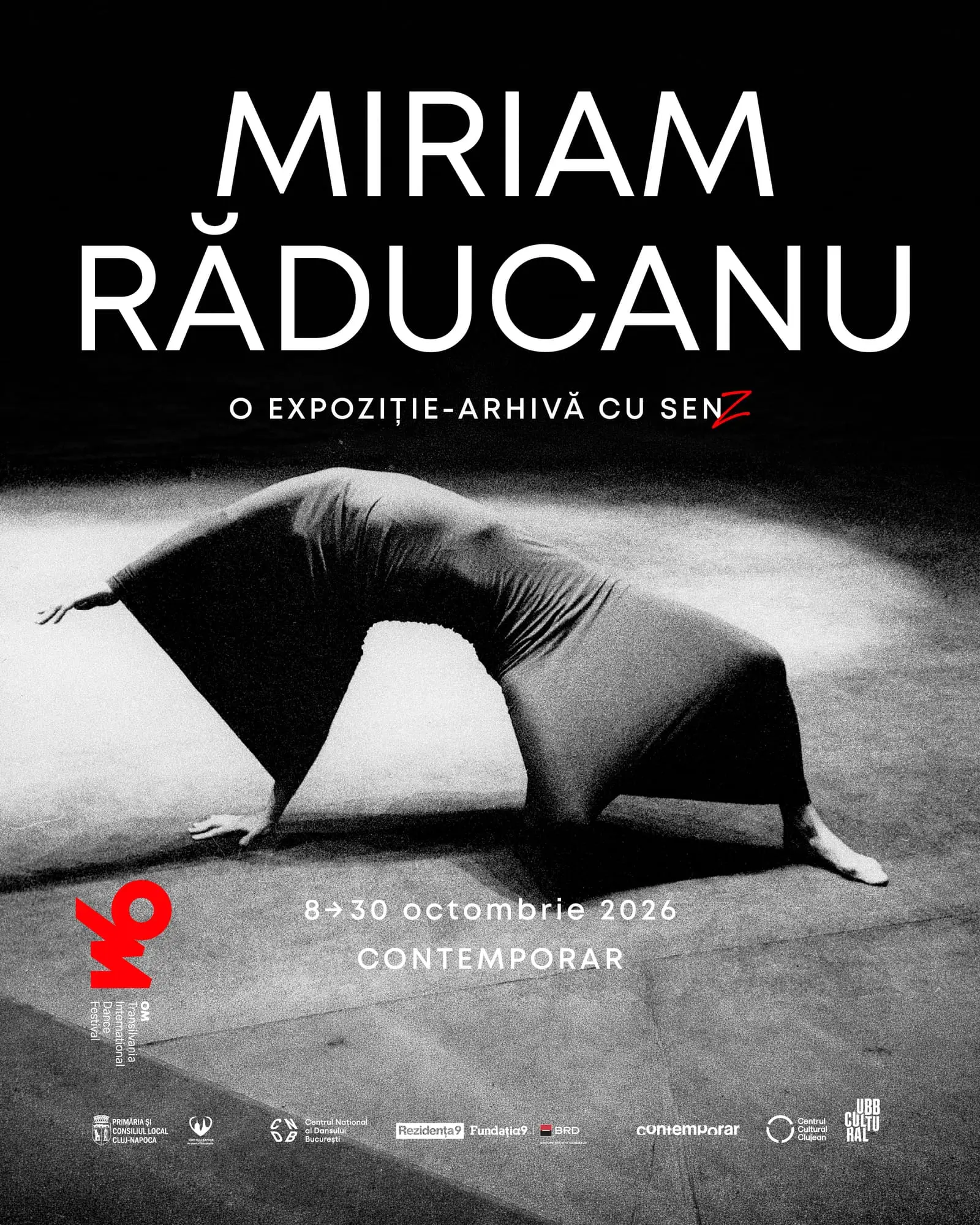
Created within the project Miriam Răducanu - an archive exhibition with SenZ, the catalogue brings together, for the first time, archival photographic documents that retrace the artist’s biographical and creative journey, revealing the extraordinary way in which Miriam Răducanu brought together dance, theatre, music and poetry. The chapters in the book, generously illustrated with archival photographic documents, are signed by Gigi Căciuleanu, Corina Cimpoieru, Suzana Dan, Mihaela Michailov, Vava Ștefănescu.
The catalogue presents the extensive activity of artist Miriam Răducanu, who brought together the worlds of dance and theatre in her work, collaborating both with renowned choreographers such as Gigi Căciuleanu, Gheorghe Iancu, Raluca Ianegic, Ioan Tugearu, and with extraordinary actors such as Gina Patrichi, Virgil Ogășanu, Victor Rebenciuc, Mariana Mihuț, as well as remarkable directors such as Radu Penciulescu, Cătălina Buzoianu, Liviu Ciulei etc.
The catalogue brings together testimonies (images, films, interviews) that illustrate Miriam Răducanu’s artistic journey, from her training in the interwar period (influenced by German Expressionist dance) and her role as the first director of the School of Choreography, to her return to dance in the 1960s and her remarkable collaborations in the worlds of dance and theatre. A central moment in the artist’s activity is represented by the Nocturne 9½ performances at the Țăndărică Theatre (beginning in 1969), an avant-garde phenomenon, a “dance for two” (with Gigi Căciuleanu) and a “breaking of canons”, combining jazz, folklore and theatre in a hybrid and innovative way. The texts by Gigi Căciuleanu and Mihaela Michailov portray Miriam Răducanu as a “master” and a “thinker”, whose creative approach was based on rigor, freedom, improvisation and the concept of “destruction” as a method for breaking clichés and forcing the scenic reinvention of actors, emphasizing the organic meaning of movement rather than its decorative function.
We invite you to discover the entire archive of meanings in Miriam Răducanu’s dances in the pages of the catalogue, edited by Corina Cimpoieru.
The catalogue, together with four collectible photographs, will be available during the exhibition for purchase.
Miriam Răducanu
Born in 1924 in Piatra Neamț, Miriam Răducanu is considered one of the most influential Romanian artists, dancers, and choreographers. Her choreographic work fundamentally redefined the vocabulary of contemporary dance in Romania, exploring the essentialisation of movement and a dynamic, non-hierarchical relationship between the arts, thereby broadening the notion of dance as a space of syncretism and dialogue between dancers, musicians, poets, and actors.
Drawing on working principles rooted in German Expressionism, alongside multiple sources from Romanian folklore, literature, and theatre, her performative constructions reintegrate classical music and jazz in innovative ways.
In 1968, at the invitation of Margareta Niculescu, she initiated a performance programme as part of the Nocturnele 9 ½ series, hosted by the Țăndărică Theatre. Works created within the framework of the Nocturnele were presented on international tours in Beirut, Edinburgh, Rome, Santiago de Chile, Brussels, Berlin, and Cologne between 1969 and 1977.
Miriam Răducanu also played an important role in the rediscovery of the actor’s physicality on stage through her contributions to theatre. A mentor and teacher to several generations of dancers, she left a lasting mark on choreographic pedagogy, teaching primarily at the “Floria Capsali” High School of Choreography in Bucharest.
Co-producers: National Center for Dance Bucharest (CNDB), Rezidența9 / Fundația9 | BRD, OM Choreographic Center.
In partnership with Cluj Cultural Centre, Contemporar, UBB Cultural.
The project was carried out with the support of Cluj-Napoca City Hall and the Local Council.