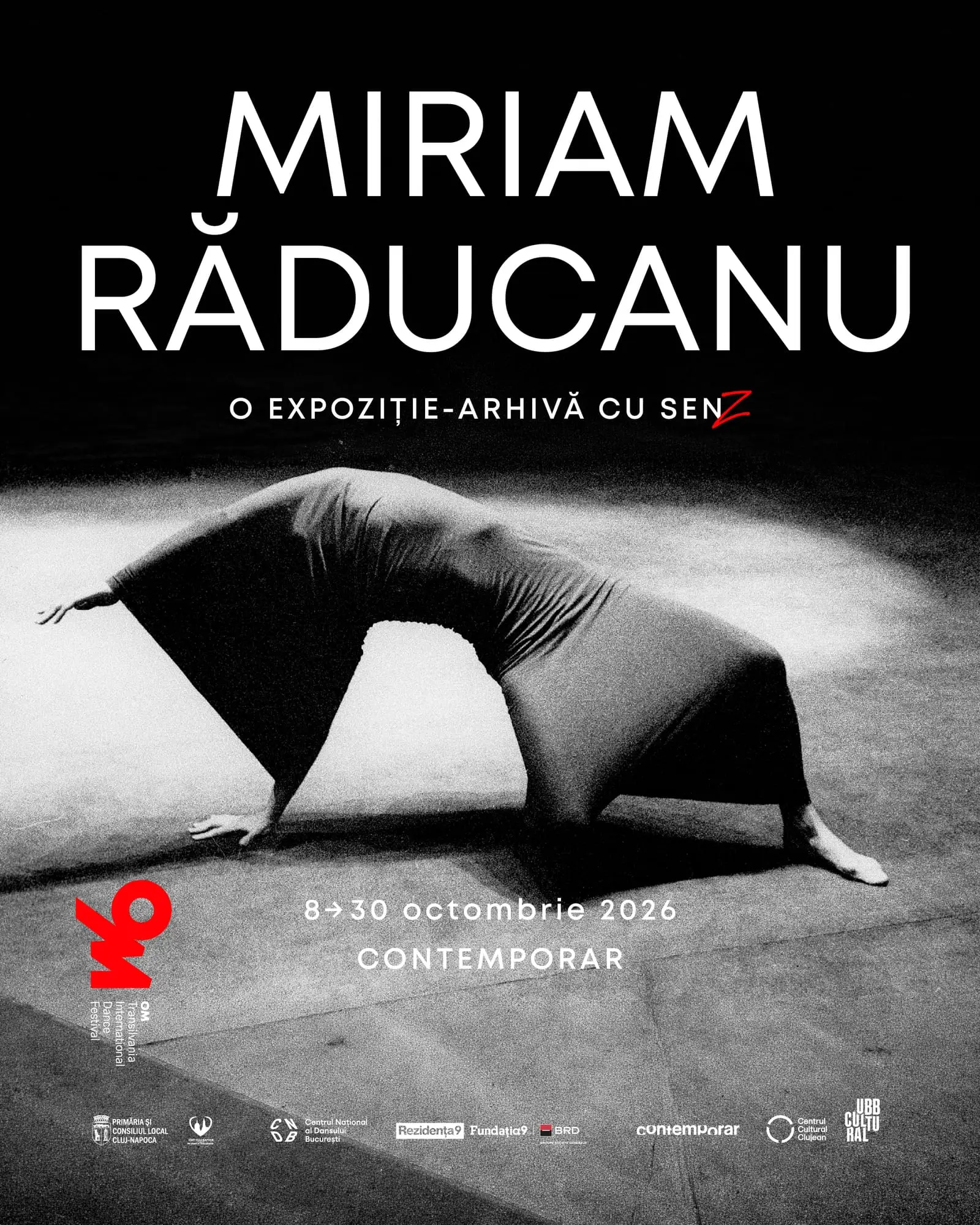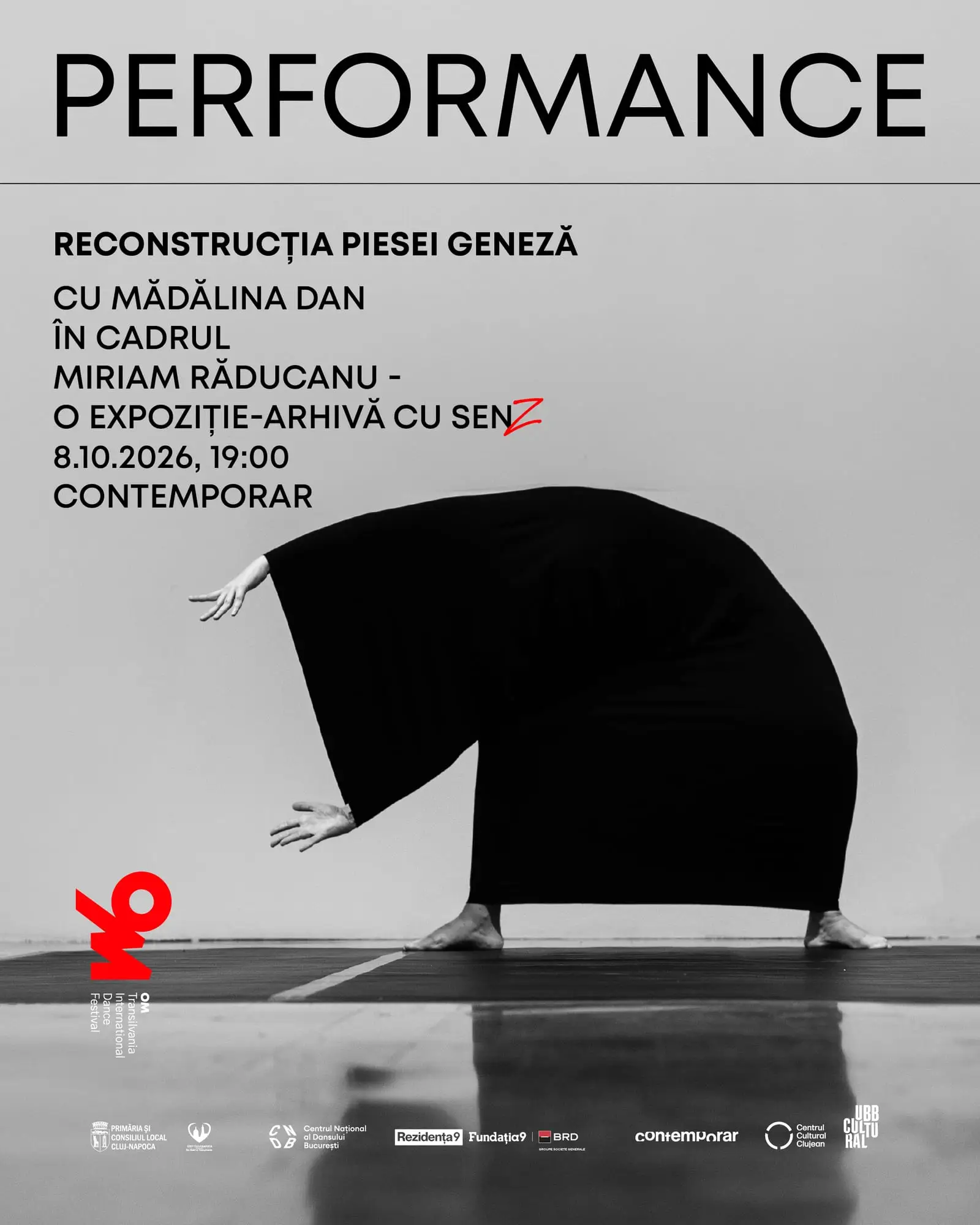
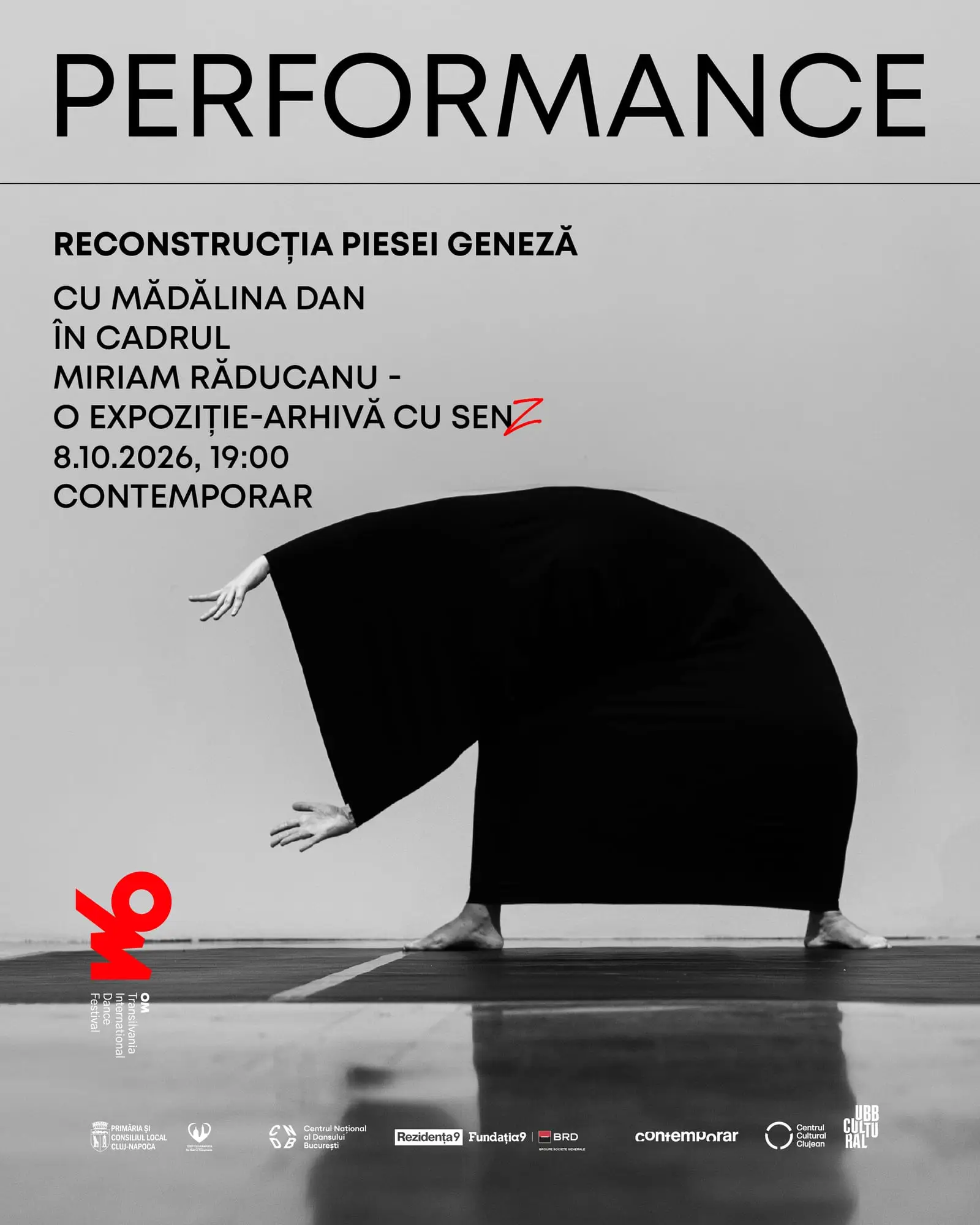
Reconstruction of Genesis
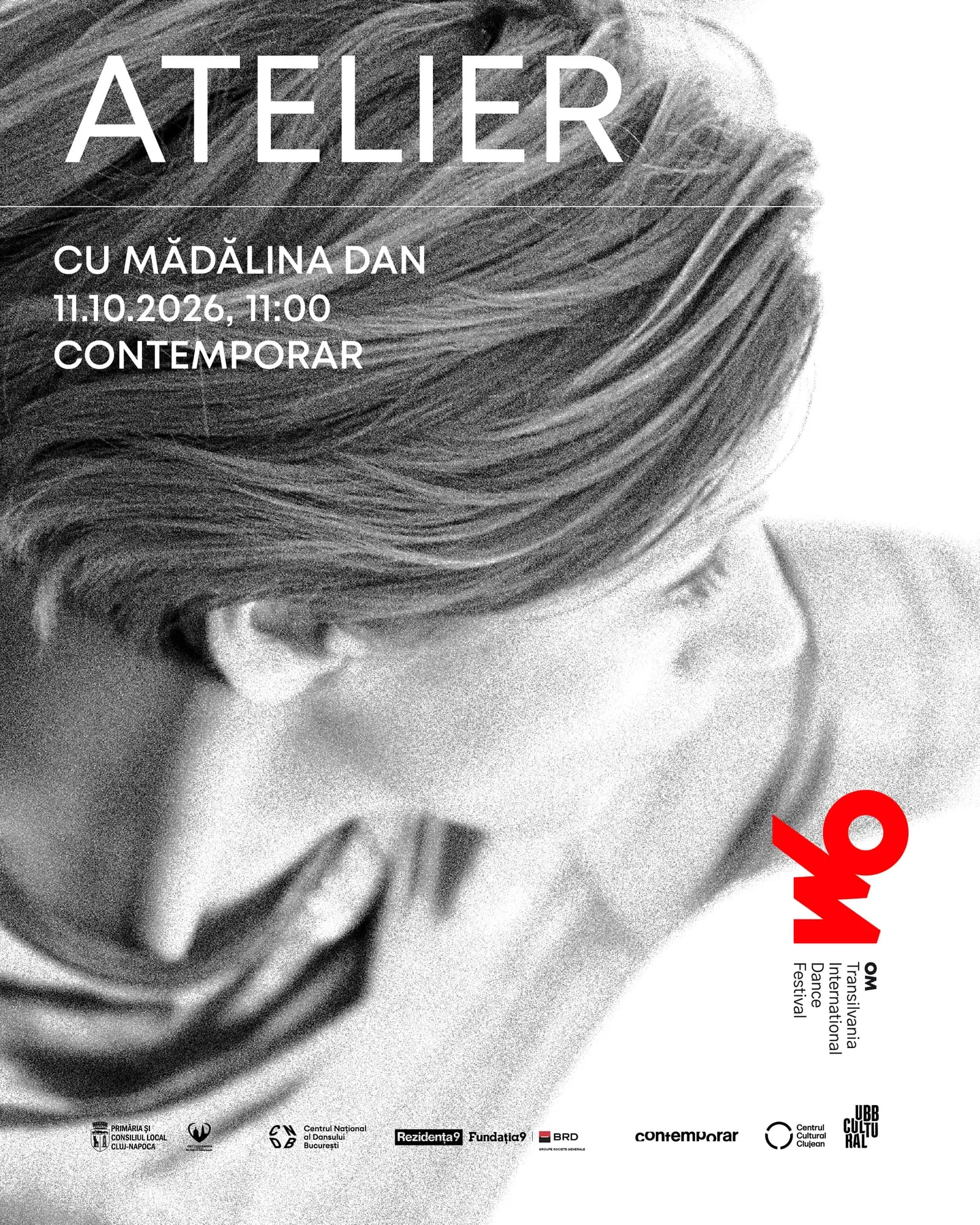
Mădălina Dan (after Miriam Răducanu)
The piece lasts 7 minutes and is performed three times within a 50-minute interval
Part of the Nocturne 9 ½ programme that made Miriam Răducanu known at the end of 1960s, the Genesis piece was presented in the frame of the exhibition Romanian Art Today in 1971 (as part of the Fringe section of the Edinburgh International Festival), event organised by the Scottish promoter, Richard Demarco, and which gathered artists from the visual arts in association with events dedicated to the latest explorations in the contemporary Romanian theatre, poetry and dance.
Genesis was created by Miriam Răducanu between 1969-1970, on a solo flute piece composed by Anatol Vieru, Bacovia Resonances, part of the cycle Music for Bacovia and Labiș, Nocturnes and Resonances (1959), in the working spaces of the “Floria Capsali” High School of Choreography in the former Lemnea street of Bucharest (the Niculescu-Dorobanțu house, where the high school had its headquarters until 1977). One of the showings of the pieces took place in the frame of Nocturne III 9 ½ on November 21, 1970 at Țăndărică Theatre, and subsequently Miriam Răducanu was invited by documentary film director Mirel Ilieșiu to integrate its choreography in the film The Great Passage (În marea trecere, 1971, 5 Lamentations in the interpretation of the Madrigal Choir), which was banned by the communist censorship at the time.
The reinterpretation signed by choreographer Mădălina Dan was commission and presented by The Institute of the Present in 2019 as part of the exhibition “24 Arguments. Early Encounters in Romanian Neo-Avant-Garde 1969-1971” (November 2019-February 2020, National Museum of Art of Romania). The piece is a reconstruction based on archive documents, texts, photographs from showings of the piece in Bucharest and Edinburgh, on the documentary The Great Passage, as well as on a series of dialogues with Miriam Răducanu.
“The body is an instrument; it does what you command it to do. […] In my case, due to my passion for music, it was the tension, the movement in course of taking shape, the leitmotif, the association that mattered the most. […] However, the hardest part is to learn to let go of the idea that dance is all about movements, instead of filtering everything through the body, of teaching the body, of listening to it closely. What I did, in fact, was a chamber dance; I was never a big orchestra.” - Miriam Răducanu in the interview-publication Chronicle of a Chamber Dance, Parkour I, P+4 Publications / The Institute of the Present, 2017.
- (1970 / 2019, reconstruction)
- by Miriam Răducanu
- choreographer and performer: Mădălina Dan
- research and artistic direction: Ștefania Ferchedău
- idea and research: Alina Șerban
- music: Anatol Vieru, Rezonanţe Bacovia, flute performer: Voicu Vasinca (recording courtesy of Vieru family)
- Production: The Institute of the Present, 2019
- Funder: Administration of the National Cultural Fund
- Acknowledgments: Miriam Răducanu, Cornel Răducanu, Lena Conta Vieru and Andrei Vieru, Cosmin Manolescu, Adelina Ivan, Constantin Rusu
- The piece has a duration of 7 minutes and will be performed three times in a 50-minute interval.
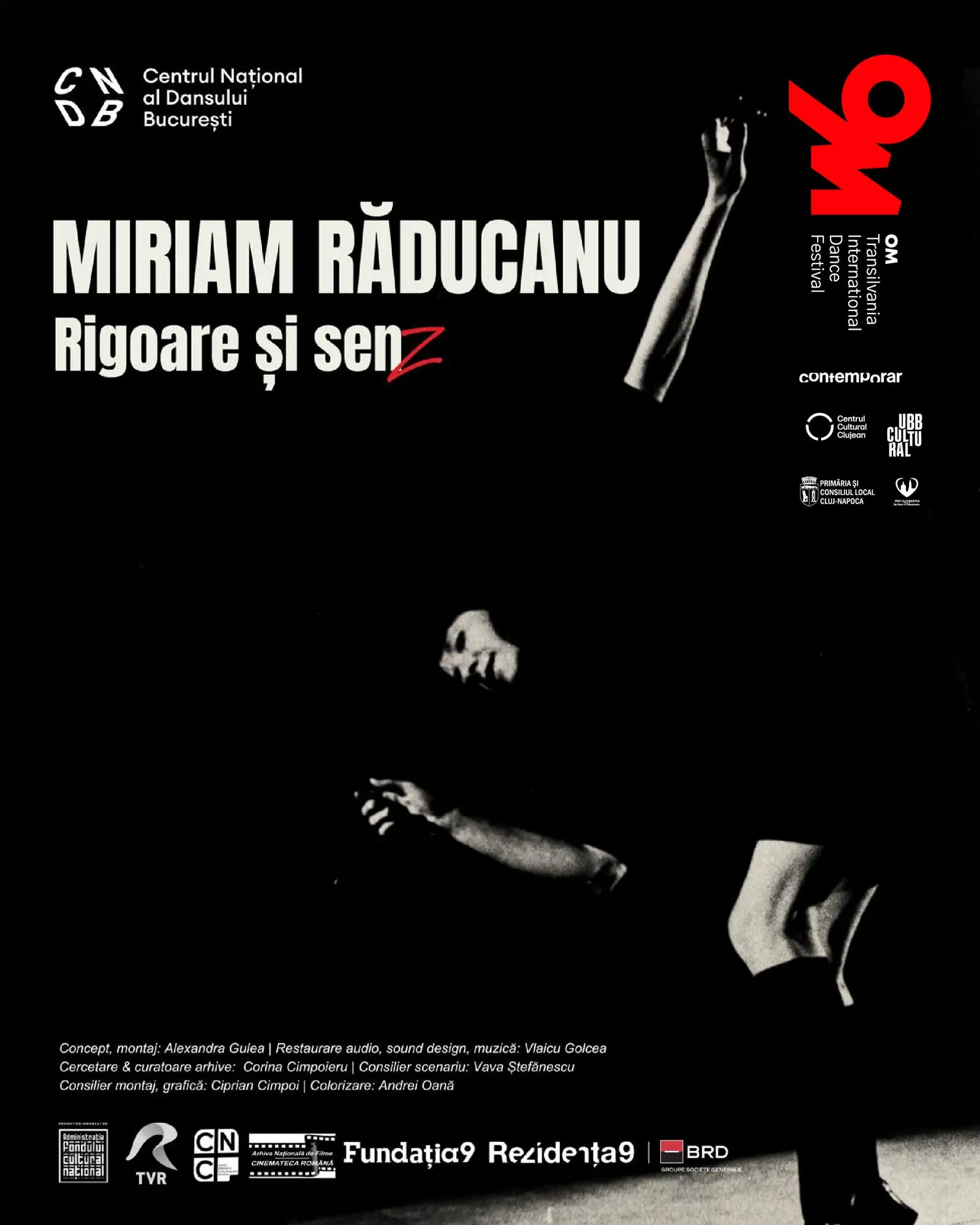
Miriam Răducanu
Born in 1924 in Piatra Neamţ, Miriam Răducanu is considered one of the most influential Romanian artists, dancers and choreographers. Her choreographies fundamentally reshaped the vocabulary of contemporary dance in Romania by exploring the essentialisation of movement, the vivid and unsubordinated interconnection between different arts, thus leading towards an expanding of the notion of dance as a space for syncretism and dialogue between dancers, musicians, poets, actors. By using working principles originating in the German expressionism, to which multiple sources from the Romanian folklore, literature and theatre were added, her performative structures reintegrated classical music or jazz in a groundbreaking manner. In 1968, at the invitation of Margareta Niculescu, she initiated a performative as part of the programme of Nocturnes 9 ½, hosted by the Ţăndărică Theatre in Bucharest. Pieces created in the framework of the Nocturnes were toured internationally in Beirut, Edinburgh, Rome, Santiago de Chile, Brussels, Berlin, Cologne (1969-1977). Miriam Răducanu also played an important role in the rediscovery of the corporality of the actor on stage, through her contributions in the field of theatre. Mentor and teacher of many generations of dancers, Miriam Răducanu left her mark on choreographic pedagogy, teaching mostly at the “Floria Capsali” High School of Choreography in Bucharest.
Mădălina Dan
Mădălina Dan is an established choreographer and performer who moved towards contemporary dance in the early 2000s, creating her own choreographies since 2007. She studied at the Choreography Highschool in Bucharest and has a BA at the choreography department of the National University of Theatre and Film, where she also received her MA in play- writing. She was a member of “Oleg Danovski” Ballet Company from 1998 till 2003. In 2008 she received the danceWEB scholarship in Vienna. She was guest artist to the Herberger Institute, School of Dance (Arizona State University) in 2009 and was associated artists at the National Dance Centre in Bucharest in 2016. She studied in Berlin at HZT (Hochschulübergreifende Zentrum Tanz Berlin) in the frame of the SoDA programme (Solo/Dance/Authorship). Her works have been shown at Springdance Festival Utrecht, Balkan Dance Platform - Novi Sad, eXplore Dance Festival - Bucharest, Temps d’Images - Cluj, SouthBank Center & Chisenhale Dance Space - London, Fabrik Potsdam, Hebbel am Uffer - Berlin, TanzFabrik-Berlin, Tanzquartier Wien, Dance Theater Workshop - New York, Firkin Crane-Cork, Alta Theater - Prague, Art Stations Foundation - Poznan, Sophien Saale - Berlin, FFT Düsseldorf, Impulse Festival, Mulheim, Lyon Dance Biennale, Schauschpiel Leipzig, Hellerau - Dresda etc. She received an award from the National Dance Centre in Bucharest at the CNDB Awards 2015.
The project was carried out with the support of Cluj-Napoca City Hall and the Local Council.