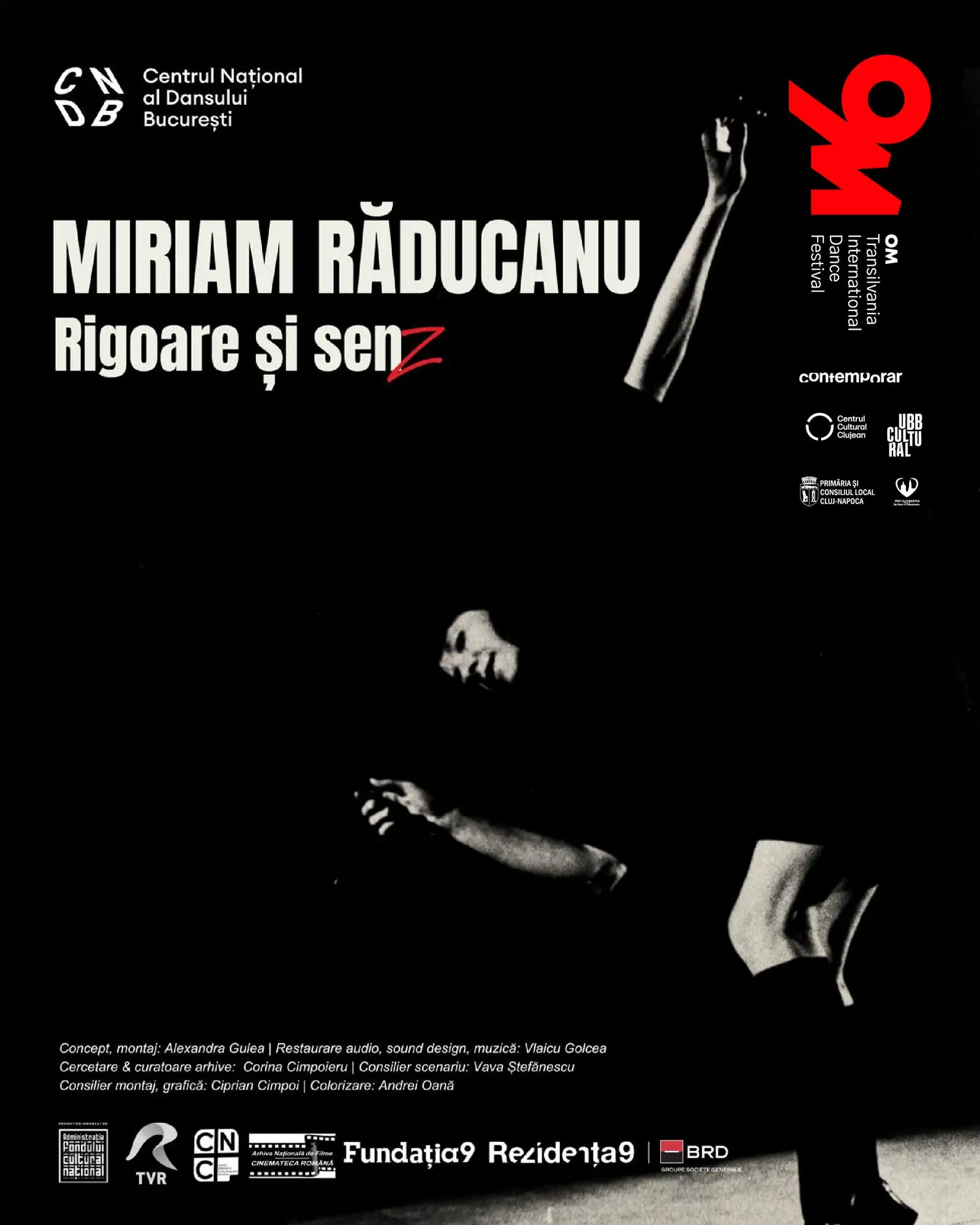
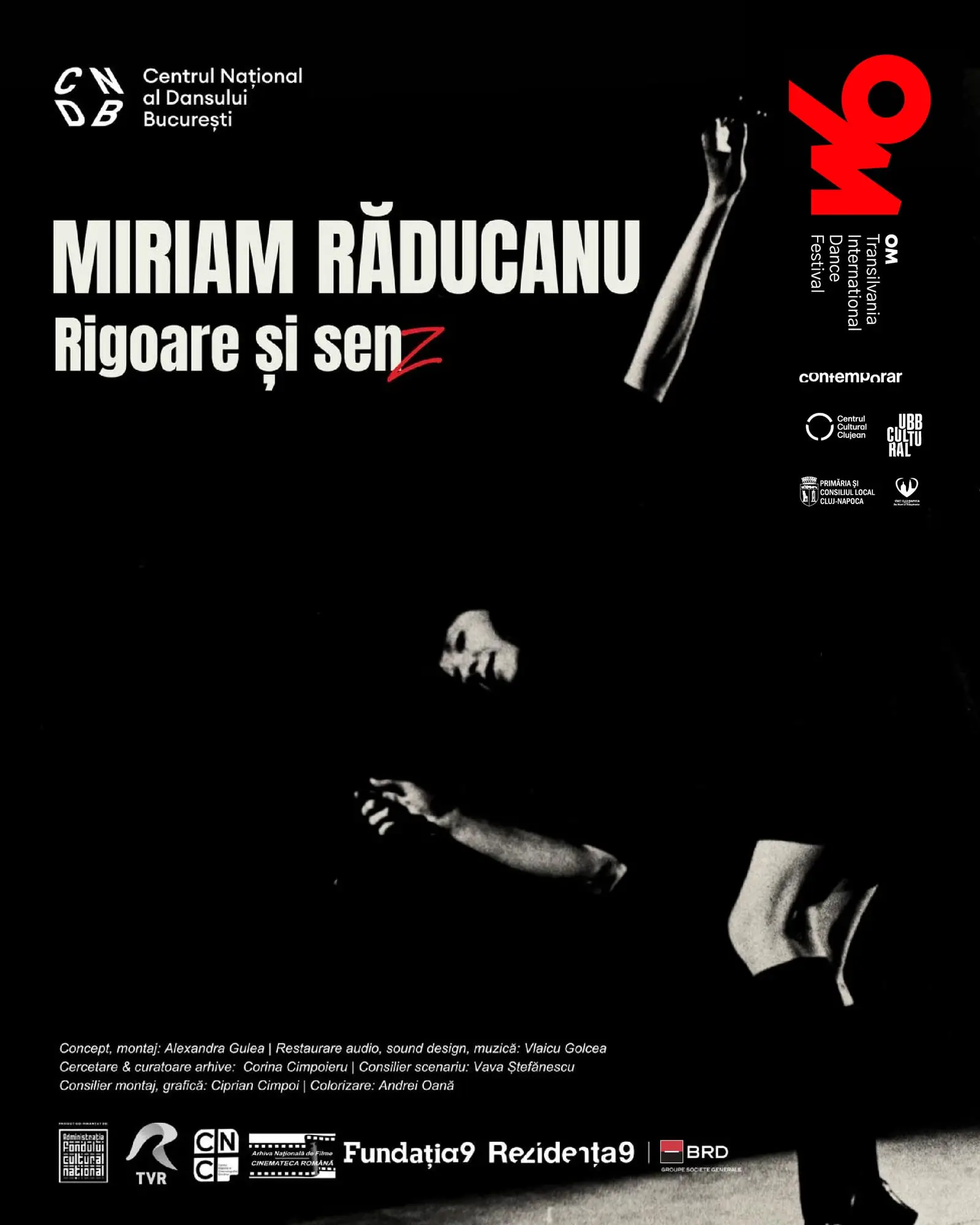
Miriam Răducanu - Rigor and senZ
directed by Alexandra Gulea
About the film
”For me, the art of dance was never, for a single moment, detached from senZ.” - Miriam Răducanu
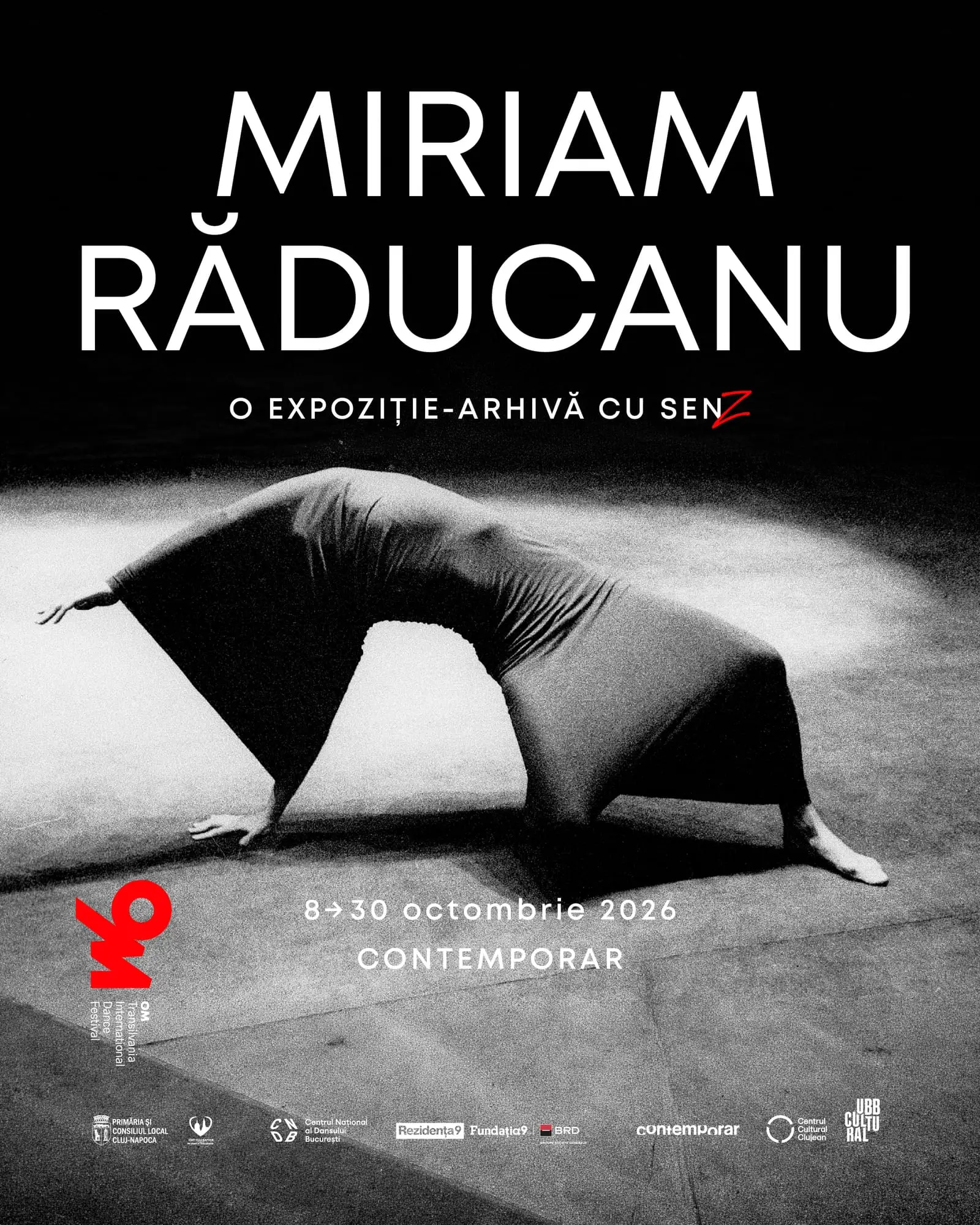
A black-and-white portrait of the centenarian artist who transformed dance into a language of the soul and opened new horizons for movement and artistic creation in Romania - Miriam Răducanu. Through movement, she explored a wide range of music, from Handel and Messiaen to Maria Tănase and Johnny Răducanu, bringing depth and expressiveness to every gesture.
The film reconstructs her life and artistic journey through image and sound, guiding the viewer not through a chronological history, but through a cinematic experience of her choreographic thinking. It reflects her creative spirit, situated between rigor, improvisation, and “movement without movement.” It is the portrait of a cultural legacy that continues to inspire generations of artists.
Created on the occasion of the centenary of choreographer and dancer Miriam Răducanu, the film brings together, for the first time, archival materials that retrace the artist’s biographical and creative journey, revealing the extraordinary way in which Miriam Răducanu brought together dance, music, and poetry.
The film was selected for the competition section of the Astra Film Festival in Sibiu.
- 76 min / 2024
- Concept, director: Alexandra Gulea
- Audio restoration, sound design, music: Vlaicu Golcea
- Research and archive consultant: Corina Cimpoieru
- Script consultant: Vava Ștefănescu
- Editing / graphics consultant: Ciprian Cimpoi
- Color grading: Andrei Oană
- Producers: The National Dance Center Bucharest - CNDB and Romanian Television (TVR), with the support of the Romanian National Film Center (CNC) and DACIN SARA.
- Film produced within the project MIRIAM RĂDUCANU: an exhibition - archive with senZ, co-financed by the Administration of the National Cultural Fund (AFCN) and Fundația9/BRD.
Miriam Răducanu
Born in 1924 in Piatra Neamț, Miriam Răducanu is considered one of the most influential Romanian artists, dancers, and choreographers. Her choreographic work fundamentally redefined the vocabulary of contemporary dance in Romania, exploring the essentialisation of movement and a dynamic, non-hierarchical relationship between the arts, thereby broadening the notion of dance as a space of syncretism and dialogue between dancers, musicians, poets, and actors.
Drawing on working principles rooted in German Expressionism, alongside multiple sources from Romanian folklore, literature, and theatre, her performative constructions reintegrate classical music and jazz in innovative ways.
In 1968, at the invitation of Margareta Niculescu, she initiated a performance programme as part of the Nocturnele 9 ½ series, hosted by the Țăndărică Theatre. Works created within the framework of the Nocturnele were presented on international tours in Beirut, Edinburgh, Rome, Santiago de Chile, Brussels, Berlin, and Cologne between 1969 and 1977.
Miriam Răducanu also played an important role in the rediscovery of the actor’s physicality on stage through her contributions to theatre. A mentor and teacher to several generations of dancers, she left a lasting mark on choreographic pedagogy, teaching primarily at the “Floria Capsali” High School of Choreography in Bucharest.
The project was carried out with the support of Cluj-Napoca City Hall and the Local Council.